Learning how to track expenses is an important step toward understanding your spending habits and managing your money more carefully. Whether you receive a monthly salary, earn through freelancing, run a small business, or manage household finances, recording your transactions can help you see where your money goes.
Learning how to track expenses regularly can help you understand your spending habits, identify unnecessary costs, and make better financial decisions.
Many people remember their major purchases but overlook smaller daily expenses. Over time, these smaller transactions can make it difficult to understand actual spending patterns.
A simple expense tracking routine can help you organize financial records, identify spending categories, and make more informed decisions. In this guide, you will learn practical ways to record expenses, track income, review your spending, and use an online Expense Tracker.
Table of Contents
ToggleWhat Is Expense Tracking?
Expense tracking is the process of recording and reviewing the money you spend. It can include everyday purchases, household bills, transportation costs, subscriptions, educational expenses, and other payments.
You can also record income alongside expenses to understand the difference between money received and money spent.
For example, a monthly record might include:
Salary received.
Grocery purchases.
Electricity and internet bills.
Transportation expenses.
Shopping and personal purchases.
Money received from freelance projects.
Organizing these entries helps you maintain a clearer record of your financial activity.
This simple approach makes tracking expenses easier for beginners who want to build better money management habits.
Why Is It Important to Track Your Expenses?
Recording your transactions can help you understand your spending patterns and organize your financial information.
1. Understand Your Spending Habits
When you record purchases regularly, you can see how much you spend on different activities and categories.
2. Identify Unnecessary Spending
Reviewing transaction records may help you identify recurring purchases or expenses that you could reduce.
3. Organize Financial Records
Keeping income and expenses in one place makes it easier to review your transactions.
4. Improve Budget Planning
Understanding your regular expenses can help you make a more realistic spending plan.
5. Monitor Your Financial Balance
Recording income and expenses allows you to calculate the difference between money received and money spent.
How to Track Expenses: 7 Practical Steps
If you want to build a useful expense tracking routine, follow these simple steps.
Step 1: Record Every Important Transaction
Start by recording the money you receive and the money you spend. Include regular bills, grocery purchases, travel costs, and other relevant transactions.
Try not to ignore small purchases. Recording them can provide a more complete picture of your spending.
One of the easiest ways to learn how to track expenses is to record every purchase immediately instead of relying on memory.
Step 2: Separate Income and Expenses
Keep incoming and outgoing transactions separate.
Examples of income include salary, freelance payments, and business receipts. Examples of expenses include rent, groceries, electricity bills, and transportation costs.
This separation helps you understand the relationship between your earnings and spending.
Step 3: Organize Transactions by Category
Create useful categories such as:
Food
Shopping
Travel
Bills
Health
Education
Business
Other
Consistent categories make it easier to review your spending and identify areas that require attention.
Step 4: Record Transaction Dates
Add the correct date whenever you record a transaction. This helps you understand when purchases were made and makes your financial history easier to review.
Step 5: Add Clear Descriptions
Use short descriptions such as grocery shopping, mobile recharge, electricity payment, salary received, or client payment.
Clear descriptions help you identify transactions without having to remember what each entry represents.
Step 6: Review Your Spending Regularly
Review your recorded transactions at regular intervals. Look at the categories where you spend the most and consider whether your spending matches your priorities.
You can also compare total recorded income with total recorded expenses to understand your current recorded balance.
Step 7: Adjust Your Spending Plan
Use the information from your records to make practical decisions. If a particular category takes up more of your available money than expected, consider whether adjustments are possible.
The purpose of tracking is not simply to collect numbers. It is to understand your financial activity and use that information more thoughtfully.
How to Use an Online Expense Tracker
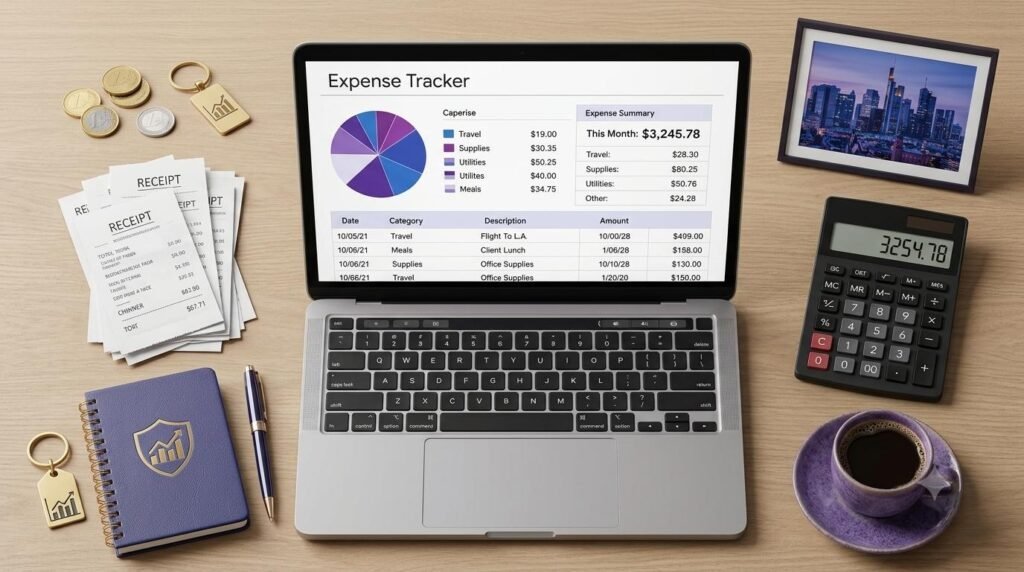
A digital Expense Tracker can make it easier to record transactions and review your financial activity.
You can use our free Online Expense Tracker to record income and expenses in one place.
Follow these steps:
Open the Expense Tracker tool.
Select Income or Expense.
Enter the transaction amount.
Choose a suitable category.
Select the transaction date.
Add an optional description.
Click Add Transaction.
Review your total income, total expenses, and current balance.
Use the available filters to find specific transactions.
The tool calculates your recorded balance by subtracting total expenses from total income.
Your transaction records are stored locally in your browser using local storage. They are not automatically synchronized across devices or browsers. The tool does not connect to your bank account, so you must enter transactions manually.
If you want to know how to track expenses more efficiently, use our free Expense Tracker to record income, organize spending, and monitor your current balance.
Common Types of Expenses to Track
Understanding different expense categories can make your records more useful.
Household Expenses
These may include rent, electricity, water, internet, groceries, and other regular household payments.
Food and Grocery Expenses
Record supermarket purchases, daily meals, food delivery, and other food-related spending.
Transportation Expenses
Include fuel, public transport, taxi fares, vehicle maintenance, and travel costs.
Health Expenses
Record medical appointments, medicines, health services, and other relevant payments.
Education Expenses
These may include course fees, books, learning subscriptions, and educational materials.
Shopping and Personal Expenses
Keep track of clothing, accessories, personal purchases, and other shopping activities.
Expense Tracking vs. Budgeting
Expense tracking and budgeting are related, but they serve different purposes.
| Expense Tracking | Budgeting |
|---|---|
| Records money already received or spent | Plans how money should be allocated |
| Shows actual transaction history | Sets spending limits and targets |
| Helps identify spending patterns | Helps organize future spending |
| Focuses on recording financial activity | Focuses on planning financial activity |
Expense tracking provides useful information that can support better budget planning. Both methods can work together as part of a practical money management routine.
Knowing how to track expenses also makes it easier to create a realistic monthly budget based on your actual spending.
Tips for Building a Consistent Expense Tracking Habit
Record Transactions Promptly
Add transactions as soon as possible instead of waiting until the end of the month.
Keep Categories Simple
Use categories that are easy to understand and consistently apply.
Review Small Purchases
Frequent small purchases can be easy to overlook. Recording them helps create more complete financial records.
Review Records Regularly
Choose a convenient time to review your transactions and understand your spending patterns.
Keep Your Records Accurate
Check amounts, dates, and transaction types before saving entries.
Protect Your Financial Information
Use trusted devices and browsers when maintaining personal financial records. Remember that browser-based tools may lose saved information if local browser storage is cleared.
Understanding how to track expenses helps you recognize where your money goes and which spending habits need improvement.
Common Expense Tracking Mistakes to Avoid
Forgetting small purchases: Record relevant transactions regularly.
Using incorrect categories: Choose categories that describe the transaction accurately.
Mixing income and expenses: Select the correct transaction type.
Entering incorrect amounts: Review the amount before saving.
Ignoring transaction dates: Use the correct date for each entry.
Never reviewing records: Use your transaction history to understand spending patterns.
Depending on incomplete records: Remember that your recorded balance reflects only the entries you have added.
A consistent routine is essential when learning how to track expenses and avoid missing important transactions.
Frequently Asked Questions
You can use a notebook, spreadsheet, or digital Expense Tracker. Record each transaction with its amount, category, date, and description.
Recording transactions daily or as soon as practical is a useful approach. Regular updates make it easier to maintain accurate records.
Yes. A tool that supports both income and expense entries can help you review the difference between money received and money spent.
Categories help you understand which areas account for your spending. They can also make it easier to review and compare different types of purchases.
Our online Expense Tracker is free to use. You can manually record transactions, organize categories, and view your recorded balance.
Our tool does not connect to bank accounts. You need to enter your transactions manually.
Yes. Our tool has a responsive layout designed for mobile, tablet, and desktop screens.
No. Expense tracking records financial activity, while budgeting involves planning how money should be allocated. You can use expense records as a starting point for preparing a budget.
Conclusion
Learning how to track expenses can help you understand your spending habits and maintain more organized financial records. By recording transactions, separating income from expenses, using consistent categories, and reviewing your spending regularly, you can make more informed decisions about your money.
You do not need a complicated financial system to get started. Begin with your everyday transactions and build a consistent record-keeping routine.
Once you understand how to track expenses consistently, managing your money and planning your financial goals becomes much easier.
Try our free Expense Tracker Tool to record income, manage expenses, and review your recorded balance.
Related Guides & Tools
Expense Tracker
Record income and expenses, organize categories, and review your current recorded balance.
Daily Planner
Organize your daily activities and plan important responsibilities.
Task Manager
Organize tasks, set priorities, and manage due dates.
Goal Tracker
Set personal and professional goals and monitor your progress.
Free Tools & Utilities
Explore more free calculators, productivity tools, and useful online utilities.
Habit Tracker
Build consistency by recording daily habits and monitoring weekly progress.
Explore More Digital Tools at DigiMarket
Looking for more useful digital resources and productivity solutions? Explore DigiMarket – The Marketplace for Digital Treasures to discover digital products, practical resources, and tools designed to support your online work and learning.
Whether you are exploring digital resources for business, marketing, or productivity, DigiMarket offers a growing collection of useful digital solutions.
Learn More with Prernaa
Want to improve your digital skills and learn practical ways to work smarter? Explore Prernaa – Inspiring Learning for useful learning resources, practical guides, and educational content.
Discover helpful information that can support your personal learning and digital growth.