Learning how to build good habits can help you create a more organized routine and make steady progress toward your personal goals. Whether you want to exercise regularly, read more books, improve your health, or develop a new skill, small actions repeated consistently can make a meaningful difference over time.
However, starting a new routine is often easier than maintaining it. A practical approach is to choose manageable activities, connect them to your daily schedule, and track your progress regularly.
Understanding how to build good habits starts with choosing activities that are easy to repeat. Rather than making several changes at once, focus on one meaningful action and give yourself enough time to make it part of your routine.
Table of Contents
Toggle1. Understand Why Good Habits Matter
Habits are repeated actions that gradually become part of your everyday routine. They can influence how you spend your time, approach responsibilities, and work toward personal goals.
Good habits can help you:
Maintain a more organized daily routine.
Make time for learning and personal development.
Support regular physical activity.
Improve awareness of everyday choices.
Work toward long-term goals through smaller actions.
The aim is not to change everything immediately. Begin with activities that are realistic and meaningful to your lifestyle.
2. Start with Small and Achievable Goals
One of the practical ways to build good habits is to begin with small actions.
For example:
Read for 10 minutes instead of planning to finish an entire book.
Walk for 15 minutes instead of starting with a demanding exercise routine.
Practice a new skill for a short period each day.
Write a few lines in a journal before going to sleep.
Spend a few minutes planning your next day.
Small goals are easier to fit into an existing schedule. Once an activity becomes familiar, you can gradually increase its duration or difficulty.
When learning how to build good habits, remember that small improvements can be easier to maintain than major changes. Choose an activity that fits your current lifestyle and increase the effort gradually as you become more comfortable.
3. Choose Habits That Match Your Goals
Before adding a new habit to your routine, understand why you want to develop it.
For example, if your goal is better health, you might choose walking, stretching, or maintaining a regular sleep schedule.
If your goal is personal growth, you might choose reading, journaling, meditation, or learning a new skill.
Try to select habits that support your actual needs rather than copying someone else’s routine.
A useful step in understanding how to build good habits is connecting each activity to a clear personal goal. When you know why a habit matters, it becomes easier to decide whether it deserves a place in your daily schedule.
4. Connect New Habits to Your Existing Routine
A new activity can be easier to remember when you connect it to something you already do.
For example:
Read after having breakfast.
Stretch after finishing your morning routine.
Review your goals before starting work.
Write in a journal before going to bed.
Practice a new skill after your regular study session.
This approach gives your new activity a natural place in your daily schedule.
If you are exploring how to build good habits consistently, try attaching a new activity to something you already do every day. This creates a familiar reminder and can make your new routine easier to remember.
5. Track Your Habits Regularly
Recording your progress can help you understand how consistently you follow your routine.
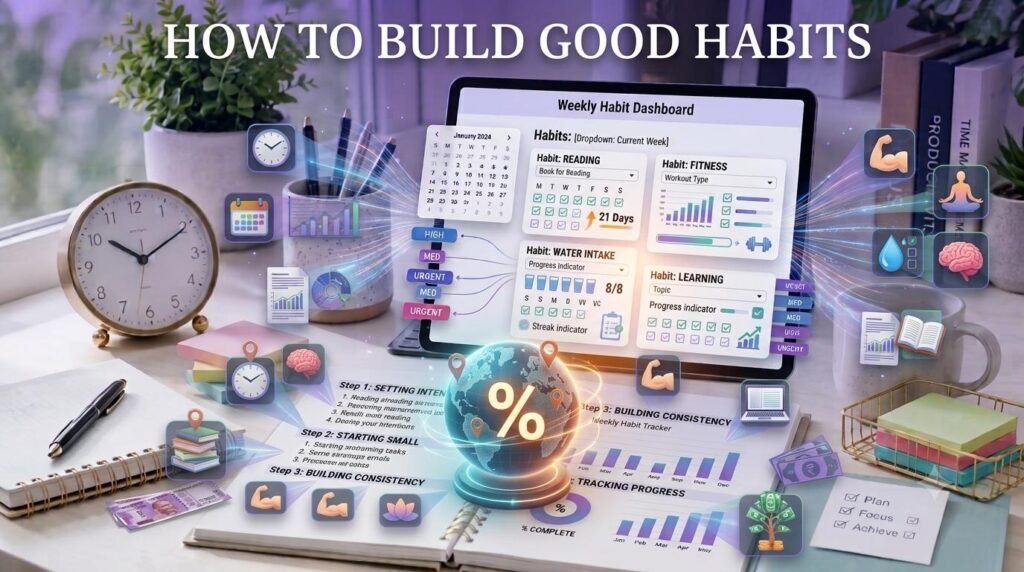
A habit tracking system allows you to mark completed activities and review your progress over time.
You can use our free Habit Tracker to:
Add multiple daily habits.
Organize habits by category.
Mark completed activities.
View Monday-to-Sunday weekly progress.
Monitor your current consecutive-day streak.
The tracker saves information in your browser on the same device. It does not automatically synchronize your data between devices.
Tracking is another practical part of how to build good habits. A simple daily record allows you to review completed activities, notice missed days, and understand whether your chosen routine is realistic.
6. Focus on Consistency Instead of Perfection
Building a routine takes time. Some days you may complete all your planned activities, while on other days unexpected responsibilities may interrupt your schedule.
Missing one day does not mean you have failed.
Instead of abandoning your goal, return to your routine at the next opportunity. Review what made the activity difficult and make adjustments when necessary.
A flexible approach can make it easier to maintain a habit over the long term.
7. Review Your Progress Every Week
A weekly review gives you an opportunity to understand how your habits are developing.
Consider these questions:
Which habits did I complete regularly?
Which activities were difficult to maintain?
Did my schedule allow enough time?
Should I make any habit easier or more specific?
What should I focus on next week?
Use your answers to make practical improvements rather than setting unrealistic targets.
Examples of Good Daily Habits
If you are unsure where to begin, consider these examples.
Health Habits
Drink water regularly.
Maintain a consistent sleep schedule.
Include physical activity in your routine.
Take short movement breaks during long working periods.
Learning Habits
Read a few pages every day.
Practice a new skill.
Review study notes.
Spend time learning something useful.
Personal Growth Habits
Practice meditation.
Maintain a journal.
Write down daily goals.
Reflect on your progress.
Productivity Habits
Prepare a daily task list.
Set priorities before starting work.
Organize your workspace.
Review unfinished tasks at the end of the day.
Choose only a few activities initially. You can introduce additional habits once your routine becomes manageable.
Common Mistakes to Avoid When Building Habits
Trying to Change Too Many Things at Once
Starting several new habits together can make your routine difficult to maintain. Begin with a small number of activities.
Setting Unclear Goals
A goal such as “be more productive” is difficult to track. Choose a specific activity, such as planning your tasks every morning.
Ignoring Your Daily Schedule
A habit needs a realistic place in your routine. Consider your existing responsibilities before deciding when to perform it.
Expecting Immediate Results
Habits develop through repeated actions. Give yourself time to adjust rather than expecting instant changes.
Giving Up After Missing a Day
An interruption does not erase your previous effort. Resume your routine and continue working toward your goal.
Frequently Asked Questions
Start with one small activity that supports your goal. Give it a regular place in your schedule and track whether you complete it.
There is no fixed number. Beginners may find it easier to start with two or three habits and add more when their routine becomes manageable.
Habit tracking provides a record of completed activities. It can help you review consistency, identify patterns, and understand which routines need improvement.
Continue your routine at the next suitable opportunity. Review why you missed the activity and make adjustments if necessary.
Yes. It can help you monitor activities related to reading, learning, fitness, reflection, and other personal development goals.
Yes. You can use our online Habit Tracker to add habits, record daily completion, and review weekly progress without creating an account.
Conclusion
Learning how to build good habits is a gradual process. Start with achievable activities, connect them to your existing routine, and review your progress regularly.
The most effective approach to how to build good habits is to stay realistic and focus on regular improvement. Celebrate small achievements, learn from interruptions, and continue working toward routines that support your personal goals.
You do not need a perfect schedule to make progress. Focus on small actions that you can realistically repeat and adjust your routine as your needs change.
Try our free Habit Tracker to record your daily habits and monitor your weekly progress. You can also explore more useful resources on our Free Tools & Utilities page.
Related Guides & Tools
Habit Tracker
Track your daily habits, mark completed activities, and monitor your weekly progress.
Free Tools & Utilities
Explore free online calculators, productivity tools, and useful utilities for everyday tasks.
Explore More Digital Tools at DigiMarket
Looking for more useful digital resources and productivity solutions? Explore DigiMarket – The Marketplace for Digital Treasures to discover digital products, practical resources, and tools designed to support your online work and learning.
Whether you are exploring digital resources for business, marketing, or productivity, DigiMarket offers a growing collection of useful digital solutions.
Learn More with Prernaa
Want to improve your digital skills and learn practical ways to work smarter? Explore Prernaa – Inspiring Learning for useful learning resources, practical guides, and educational content.
Discover helpful information that can support your personal learning and digital growth.